
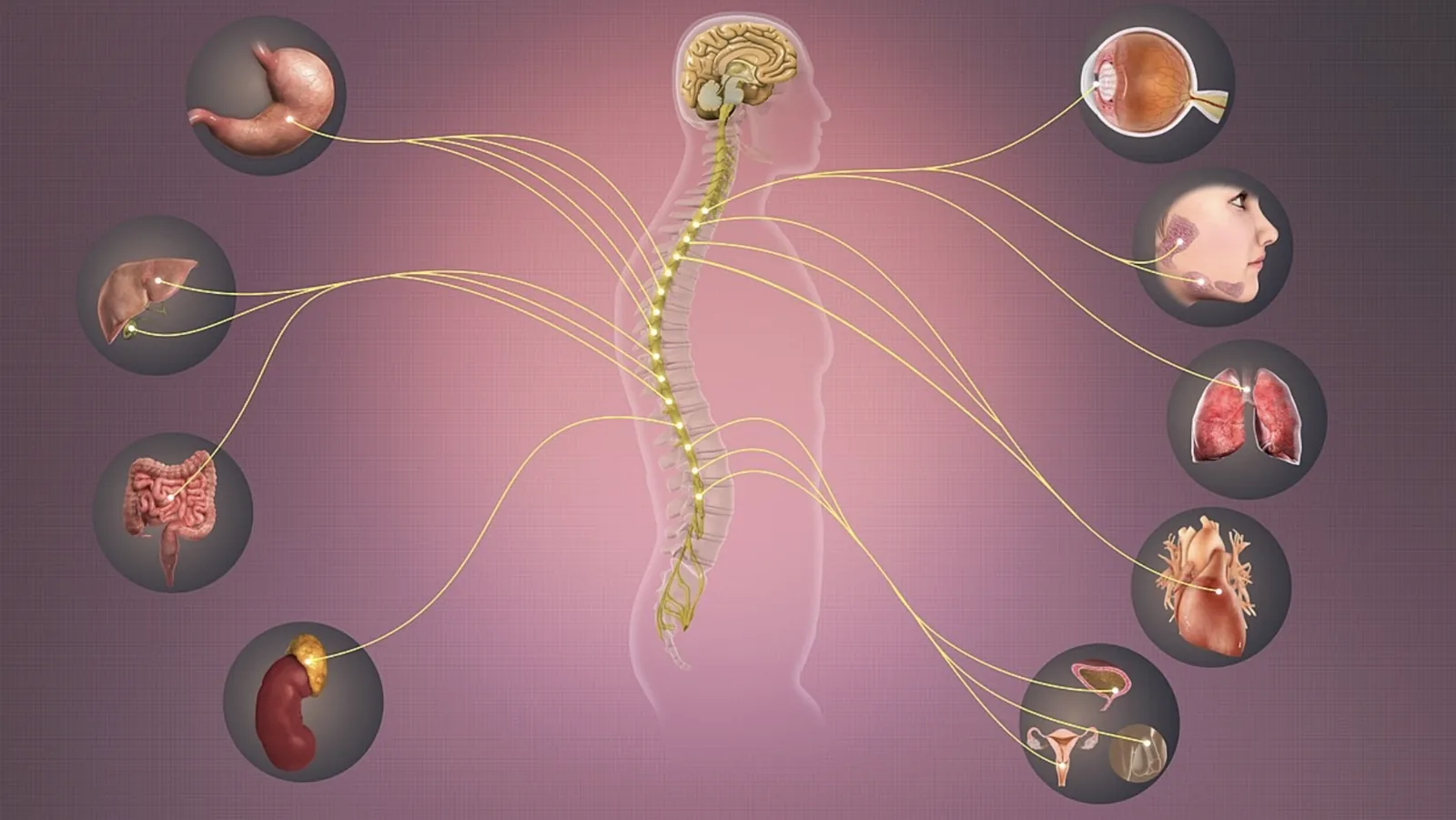
Introduction
Can physical stress cause mental stress? Can anxiety be increased due to our actions, interactions, and even our environment? These questions are something that I’m sure you have thought of before. Mainly due to the fact that everyone has experienced some form of anxiety before in their life but also anxiety has become a popular subject over the years with the rise of being aware of mental health. Anxiety used to be thought of simply as an emotion that someone experiences in a very high tense situation, possibly even life or death. However, it has now started growing into character traits, a personality, and even a mental diagnosis that is told to be managed every day with some form of mental rewiring distraction or medication. But do you really know why your body reacts this way when high physical stress situations occur? That’s what we are going to get into today with this article.
The Fear Response
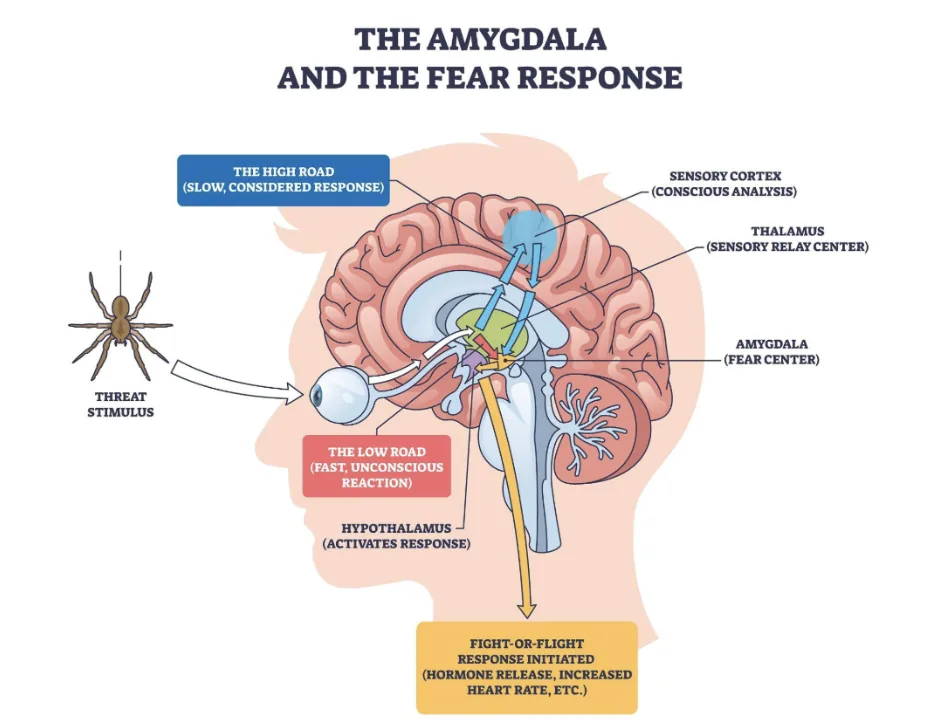
To understand why the body reacts the way it does due to the physical stress, we must look at the physiological response it makes when the “threat” occurs. When a stimulus occurs, your amygdala determines if the stimulus is a threat or not. It does it particularly fast, which is why it can sometimes misinterpret the information but we will get into that later. Anyway, when the response is determined to be a threat. It sends signals to the hypothalamus (master signal center of the brain) that in turn, ignites the hormone response to the rest of the body to put it in a state of danger and adaptability. The “fight or flight” response. This starts the process to the organs connected to the autonomic nervous system to adapt their functions to better suit the situation. At the same time, your hypothalamus starts to activate the “hypothalamus-pituitary-adrenal system axis”. The HPA axis is responsible for stress hormones being released in response to the threat. The hypothalamus releases CRH (corticotropin releasing hormone), the pituitary gland releases ACTH (adrenocorticotropic hormone), and lastly the adrenal gland releases cortisol+adrenaline. These in combination with each other curate the signals being sent to the autonomic system for changing the action of the organs in response to the stimulus.
"Fight or Flight" Response
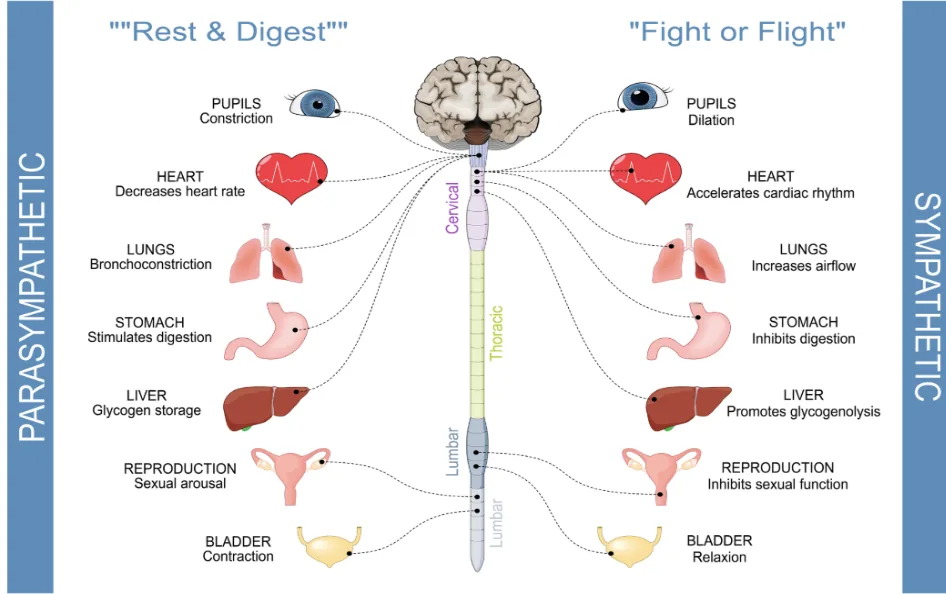
There are two normal processes the nervous system goes through. The first one being Parasympathetic which is the “rest and digest” mode of the body that is what we want to be in 95% of the time because that allows the organs to function in a way that assists in nourishing, thriving, and growing the body. The other response is called the Sympathetic response or “fight or flight” mode. This response is strictly for survival and inhibits growth to evade or overcome a situation. This is the response that occurs with amygdala detecting threat, the hypothalamus activating the HPA axis, and then coordinating to the autonomic system to function in a stress full state. As you can see from the picture, the changes that occur in the organs due to the new signals being sent are the eyes dilating to increase light, lungs breathe faster to increase air flow, muscle tense up in response, heart beat increases to increase blood flow, the stomach limits digestion and nutritional uptake which in turn creates no bowel movements and so much more.
The Hidden Response
With all this being said, do you believe that being in this state would be sustainable for 365 days a year? Or even 8 hours a day, 5 days a week? Because this is exactly what is happening now. The amount of stress a normal person experiences is ever changing and can drastically increase in a short notice, especially in today's world. And when stress occurs, anxiety is right behind it. They are closely related in every action because once you have stress, worry and fear follow it immediately. Research has shown that roughly 70% of adults experience some form of physical and psychological stress at some point throughout the year. Another stat is that 18.2% of adults reported experiencing anxiety symptoms in just the past 2 weeks and it is even reported that at least 1 out of 5 adults experience anxiety disorder each year… A disoder…..When we talk about disorder, this wording implies chronically disrupting daily life, not just experiencing symptoms. Chronically in survival mode. Chronically disrupting thriving and nourishing functions to increase quality of life. So, with this consistent occurrence of stress, anxiety, and how it affects the body's physiology. How do you think it affects how they express life or function on a daily basis? Do you think it makes them more calm and have room for their own thoughts to be expressed or are they constantly being in survival mode wondering when the next stressful event will occur and need to be prepared due to their surroundings.
This happens more commonly than we think because it doesn’t have to be an intense threat or even a threat at all that causes us to create anxiety within ourselves. Remember when I said that the amygdala responds quickly but not always precisely? The information can be misinterpreted and start the cascading process of reacting stressfully to activate anxiety in an instant. This misinterpreted reaction will even occur more often if we constantly become trained to be on high alert looking at every physical stimulus as a threat leading to a constant sympathetic state.
Conclusion
We have now connected the dots for how stress overall can directly cause anxiety but also how specifically physical stress can do so. The fact of the matter is that stress is stress and you always experience it. You can have good stress from studying or working out but you can also have bad stress like poor posture, being overwhelmed, overworking, or being attacked by a bear. However, the real question is, how will your body respond to it. How will you interpret it? Will your body rise to the occasion and fight or will it put it in the background and build up leading to chronic anxiety disorders, scattered thinking, and not being yourself. If you have already been experiencing anxiety to a point of being on medication and labeled with the mental disorder, there is still hope. Your body just needs assistance calming down and the nervous system is the key to that. There is misinterpretation and miscommunication going on between the brain and the body. The driver inside yourself has become worry, fear, pessimism, but it can be hope, joy, and optimism. Getting adjusted opens the blockages of information and floods the good information back in leading to more coherence and unity within yourself so that you don't constantly mistake small stimuluses as threats. We don't need more background noise, we need more efficiency and function. That in congruence with simply becoming more aware of yourself with how you react, interact, and cope with the world makes a difference as well. I hope you have learned something today that will go with you to think differently than the masses and find true freedom past anxiety and physical stress. Live Primal💪