
Posture
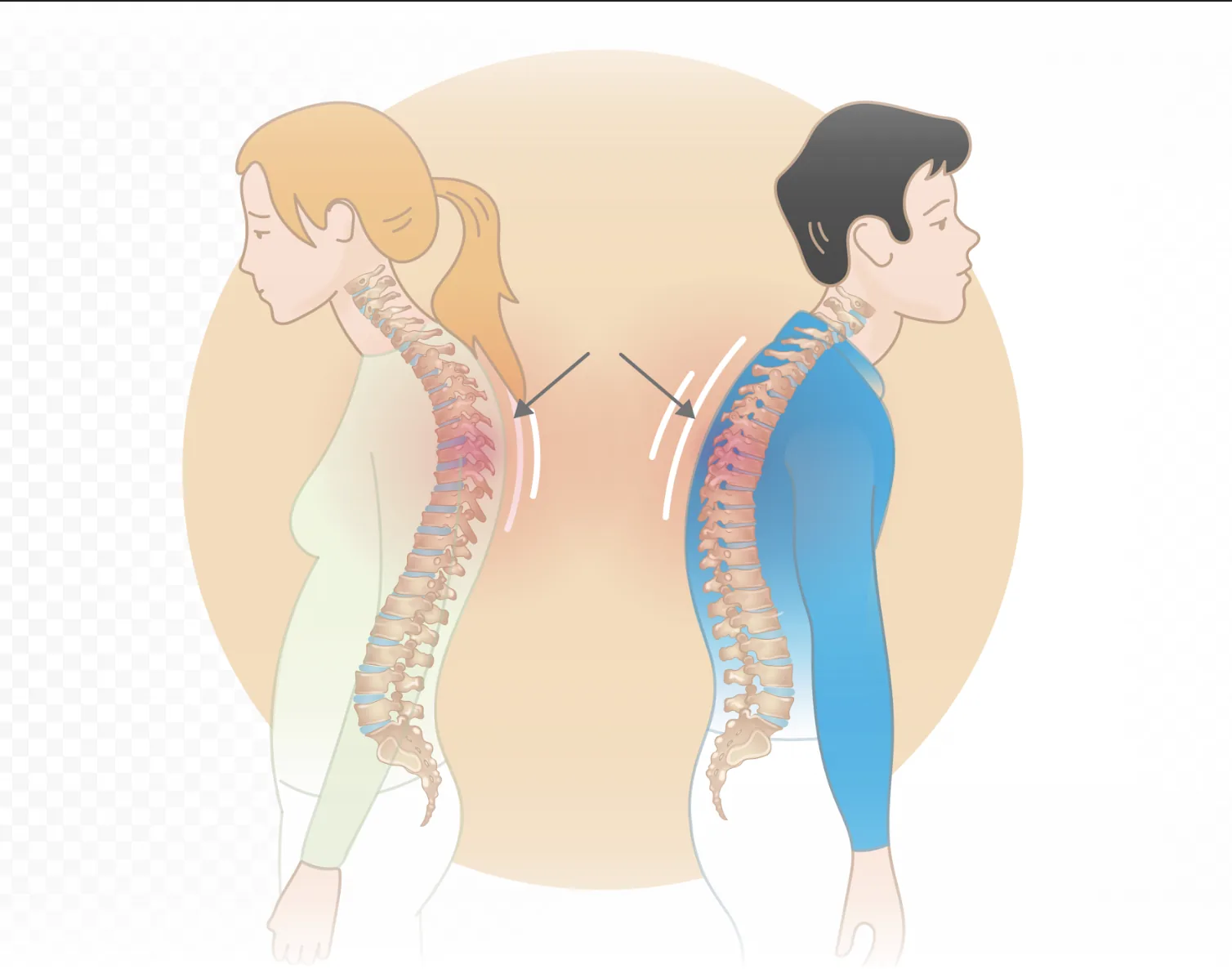
Posture has become a very popular subject over recent years. While poor posture is not a specific diagnosis, it does highlight a truly harmful issue that has started to show up more over the years, especially in the younger generations. Posture is a depiction of how we carry ourselves on a day to day basis. Portraying areas of where we hold most of our stress, carry our weight, and overall areas of mobility. Our bodies know how to take what we put it through and adapt, making it easier to use with each occurrence of activity. So, as you can guess, the more you do a certain movement or activity, your body is most likely to adhere to that, making it easier for future occurrences. So, With that being said, you would think that is good for us right? Nope, that doesn’t necessarily mean it is good for us from a health standpoint. As we know, no one does everything perfectly, especially great posture and most activities are detrimental/negative to our core patterns of the body, especially to the neck/upper back. However, it is not futile to at least try.
Forward Head Posture
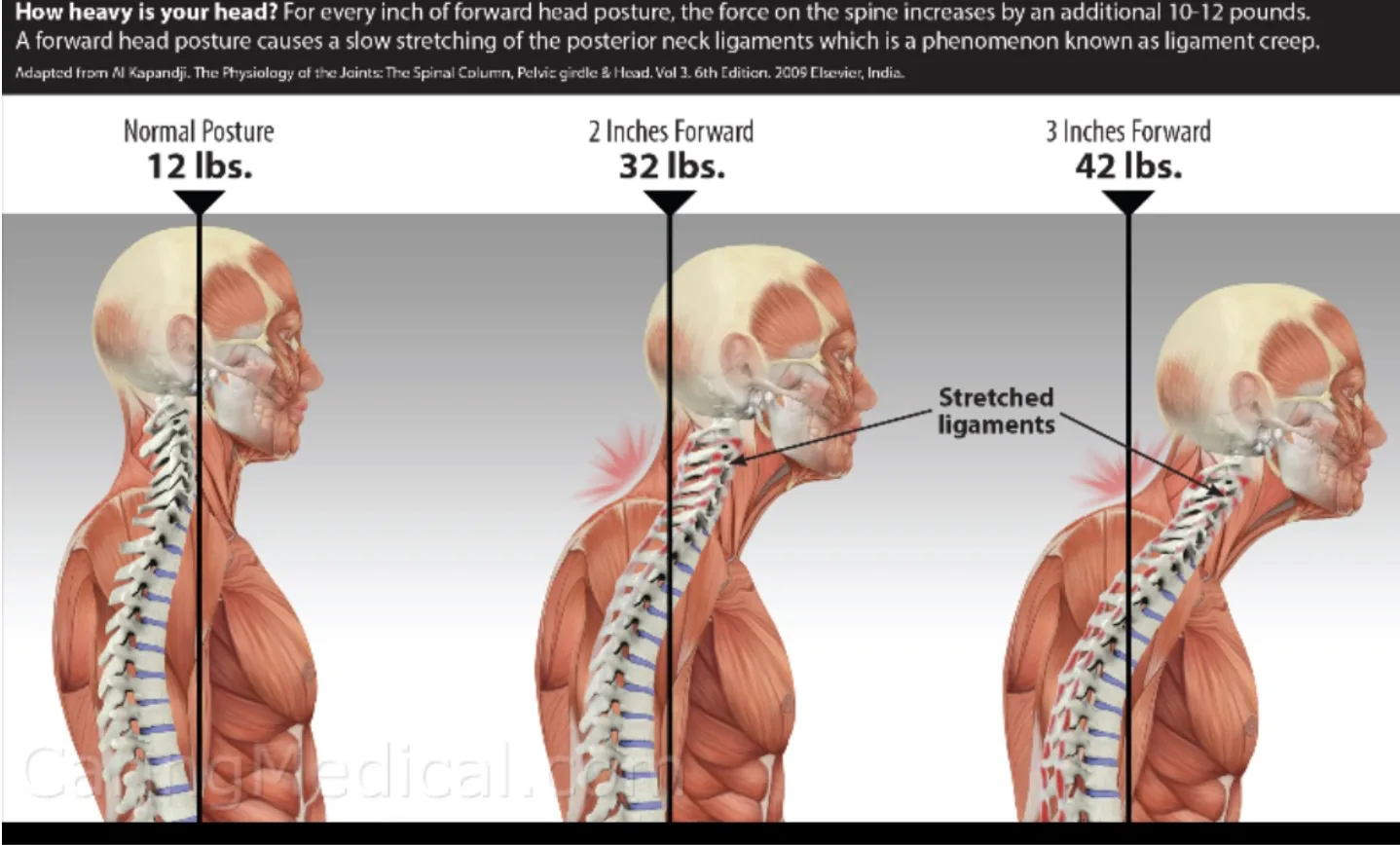
The upper back/neck or “cervical/thoracic junction” is an area specifically that has become a key topic related to posture. I believe this is mainly because it is the most influenced structure, but it is also the most visualized structure influenced by our posture. Our heads leaning forward over our chest, shoulders protruding forward, neck tension across the entire area, all creating the classic “hunch back” that people refer to not wanting to have in the future. Don’t worry, these issues do not happen overnight. You have time to work on them before they get that bad. It really happens is from consecutive instances of keeping your body in that position for whatever reason. Like we said before, our body remembers what we do and adapts. So what you want to do first is figure out what activities you do that constantly cause you to either look down or hunch forward on a daily basis. These things could include looking at your phone, playing video games, looking down at children, slouching on the couch watching tv, working at a desk, prolonged driving, constantly looking at the ground when you walk, or whatever it may be…. Now, the longer this persists, the harder it is to reverse. Did you know that under normal load, your skull with the brain weighs 10-12 lbs? Let’s say we lean our head just more inches forward, that increases the load by 5-10 lbs. The cervical spine now has to work harder in keeping stability, intervertebral discs become constantly pressurized, extensor muscles in the back head/neck become tense and over worked, and the flexor muscles in the front of the neck become weaker and shorter due to no work. Think of if you were holding a bowling ball, is it easier to do so right next to your body or on a stick stretched out in front of you. This creates an inequality in pressure across all areas that can start a downward spiral of effects for the future. So let’s see…
Cervical Spine/Intervertebral Discs
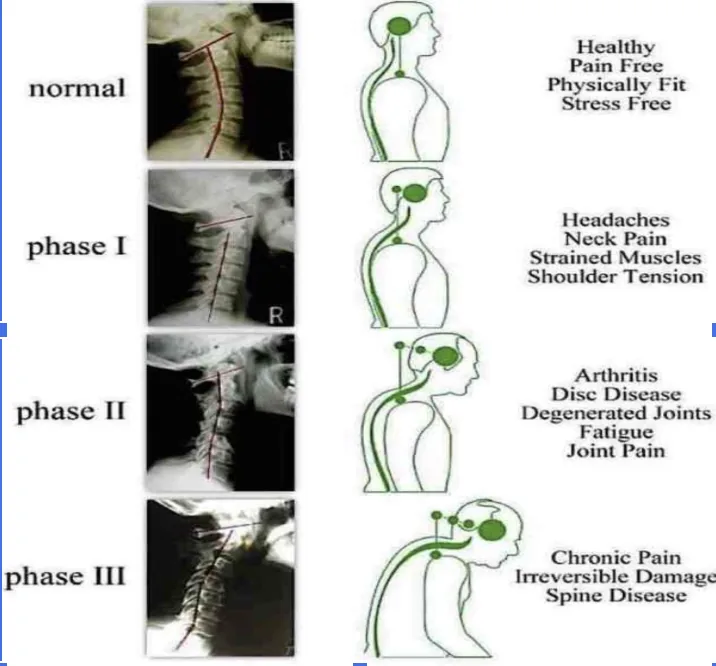
As we mentioned before, when this forward head posture occurs, it puts abnormal pressure across our spine and intervertebral discs that can take a toll. These structures have an innate amount of normal pressure they are designed to endure but when that amount is constantly exceeded, abnormalities start to arise. The vertebrae start to lay more bone, discs start to become thinner, and degeneration/arthritis becomes accelerated over the course of time. As you can see from the picture, this is how the progression of phases can go from normal to mild to moderate to severe arthritis. Again, these things do not happen overnight nor always look the same on the outside, but from my own experience with patients, it can still happen right under your nose if you don’t think about it. Things like bony issues like degenerative disc disease, osteoarthritis, degenerative joint disease, spinal stenosis, and foramenal encroachment can occur. This is the stuff that can not be reversed when it occurs. On top of those, this is also when people can start developing neurological issues as well due to the continued decrease in mobility, joint formation, soft tissue involvement, and overall stability of the spine. Some neurological conditions or symptoms that can arise or be related are thoracic outlet syndrome, cervical radiculopathy, cubital tunnel syndrome, balance issues, vertigo, blurred vision, and even carpal tunnel. Now, intensity and severity of every condition can vary person by person and just because you are developing poor posture doesn’t mean you will develop these conditions. However, I can guarantee that if not changed, no one’s body can outrun the detrimental effects that will happen.
Upper Cross Syndrome
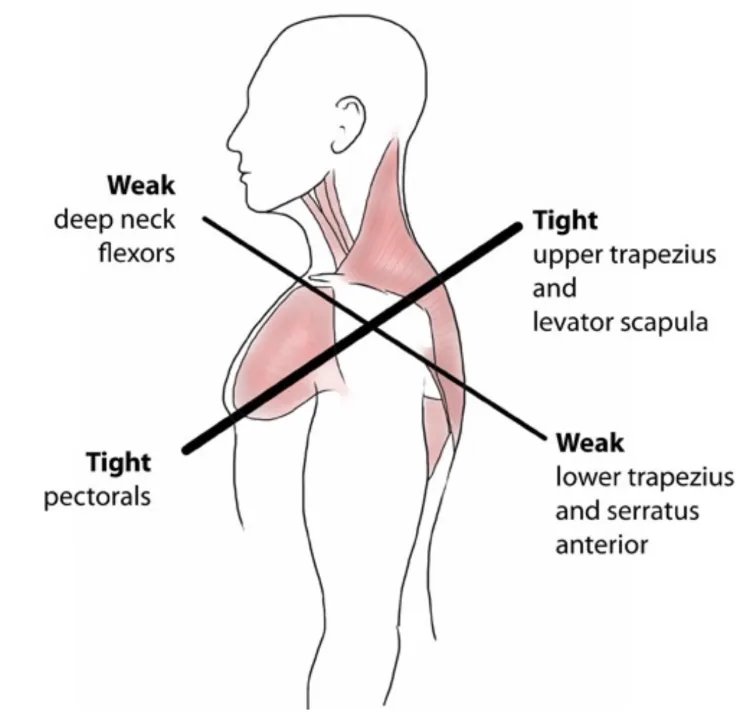
This is something that not a lot of people refer to or even know about but it does give a good layout into what truly happens to your muscles when you posture starts to go down the toilet. As we talked about before, soft tissues can be involved and when this occurs, it is called upper cross syndrome. This is when your flexor muscles become weak, extensor muscles become tense/over worked, which in turn cause your pec muscles to become tight and your upper back muscles to become weak. However, it isn’t the same cause for each effect. The deep flexor muscles such as the scalenes, SCM, and hyoid muscles become weak due to inactivity and shortening of the fibers on a consistent basis. The extensor muscles such as the levator scapula, suboccipitals, and erector spinea become tight due to the constant load of trying to hold the head upright and fighting daily movements. Our pec muscles become tight due to always doing activity with arms forward like lifting, typing, prolonged driving, or anything in general. This causes the fibers to be constantly active and shortened bringing in the shoulders closer causing the weakness in the upper back muscles like the rhomboids, lower traps, and serratus anteriors and never being p activated productively. They are never utilized for strength building and forced to lengthen from the tightened pecs.
What Can You Do To Help?
After we have gone through a multitude of things that can lead to neck pain and having poor posture, what are some things you can do to essentially help against that or even prevent it. Now, the idea is not to constantly stay vigilant and hyper fixated on the posture because that could cause the opposite effect, no one needs to be upright 24/7. What needs to be done is simply stick to the basics, motion is lotion and the more motion we have beneficially, the better off you will be. Our body craves diversity of movement. Which is why chiropractic care is essential in everyone’s life because no one 's immune to ongoing physical and mental demands of life. Adjustments keep fluid joint motion, nerve interference free, and curates a foundation of stability and solidification within the body that makes it ready to on each day as a new day. Not a day of a constant battle it has to survive through. Next, everyone’s job causes each person to uniquely have shortcomings within their body. So, it needs to be assessed and learned. What specific strength exercises and stretching movements are needed to be done for weak or tense muscles? How can we counteract daily demands on the body and continue to enhance the body’s resiliency and capability? Lastly, once we get back to a basis of normal to where the negative effects have not added and your body is simply ready to take on each day rejuvenated. We need to keep up with the small things. Acknowledging the posture in a respectable manner, daily stretching for movement, intermittent strength exercising to build stability, ergonomics awareness, drink water, and get adjusted!
Conclusion
We have ventured down the deep paths of how something so nonchalant and common in everyone’s life, can cause some disturbing effects if not managed or adhered to. No one wants to have these issues occur but we must realize that especially with today's influence of new technologies, inventions, efficiencies, lifestyles, and even work environments. Our bodies are being caught in the cross fire and then forgotten in the background until the last straw breaks. That’s waiting too long, and you could simply lose a percentage of your max potential of your body's full capability too early in your life from something even as minuscule as poor posture, if left alone long enough. And as you see can most certainly cause neck pain in the process. No one wants to wish they could have been or do something, I want you to have the ability to hope to be something. So let’s keep up with God's perfect image and also live your best life, live primal. 🙏