
Introduction
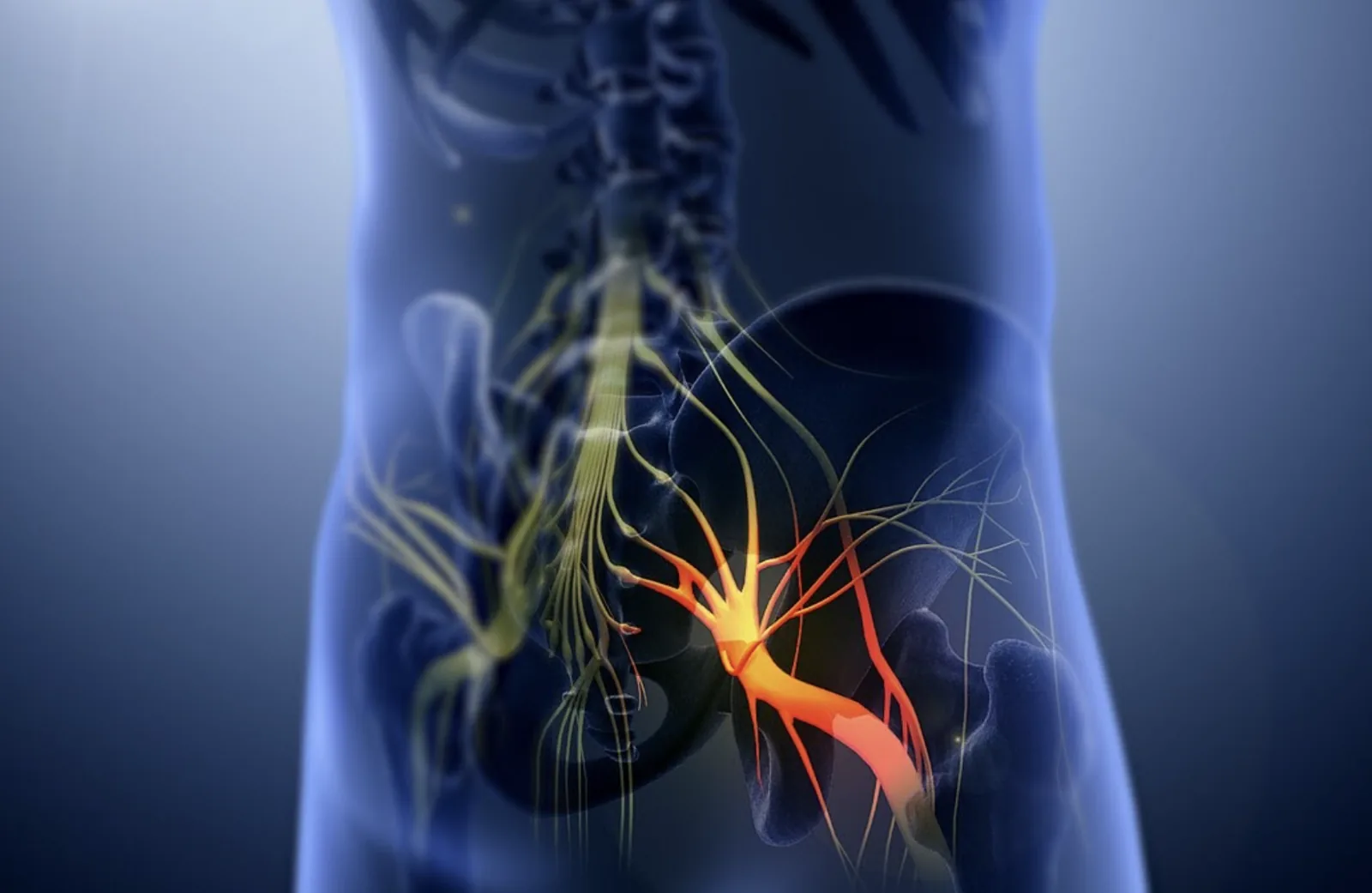
In this article, we will dive into a condition that can be thrown around like a hot potato. In my own experience with patients, any time there is leg pain, the condition “sciatica” is always thrown in and believed to be the culprit. However, what really is sciatica? Why is it constantly mentioned? What does it even feel like? Well I think it is not entirely the public's fault in being so connected to this condition. I believe in some aspects of health care, if a patient presents with leg pain that seems to be radiating down the leg or even into the glutes. They will get told it possibly could be a sciatic issue and just be sent on their way. I hope this article will shed some light into the condition to not only give you more of an understanding behind it but also help you critically think about your own body when issues do arise. Not from a diagnosing perspective but from a contributing one so you can be a part of the process, instead of a mere bystander.
What is it?
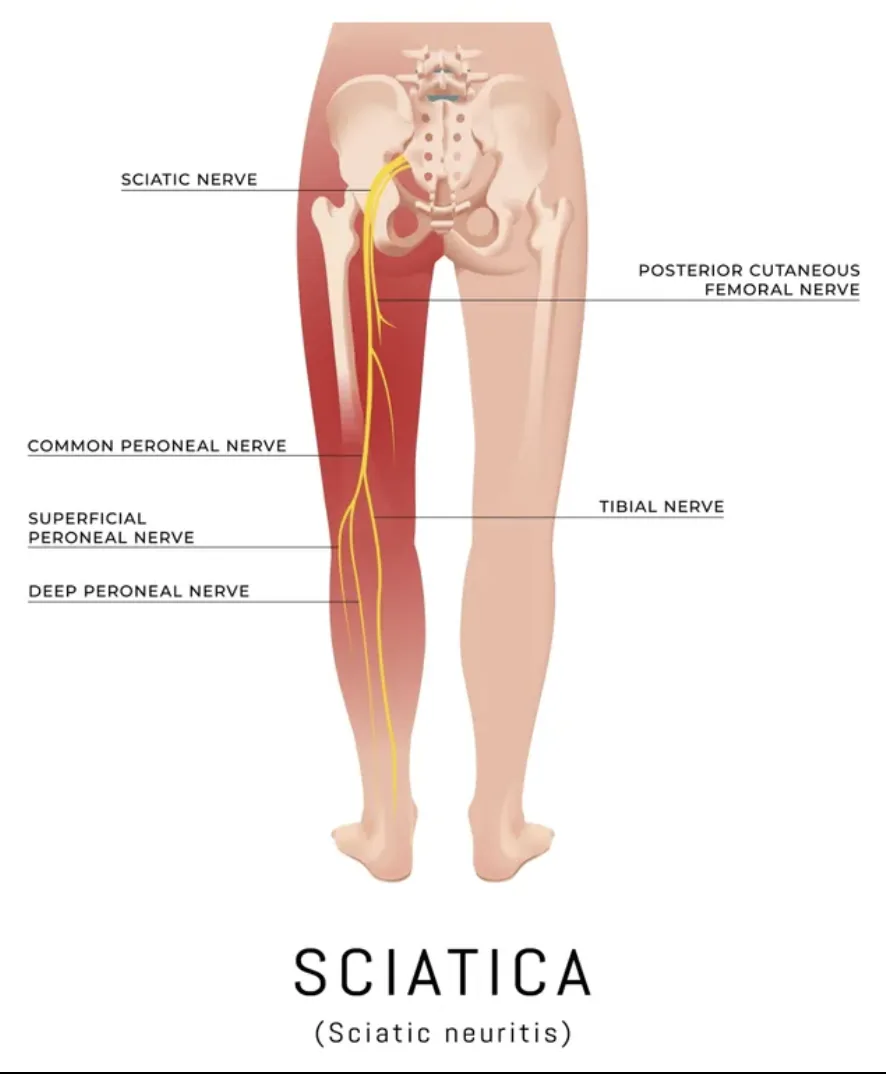
Sciatica is classified as a condition where the sciatic nerve is inflamed or labeled, “Sciatic Neuritis”. This essentially happens when there is pressure on the nerve from various structures surrounding the nerve. The sciatic nerve is the largest nerve in the body that is made of multiple levels of vertebral nerves that span the entire leg providing innervation for all structures along the way. It originates from the levels of L4-S1, then combines into this nerve, the width of your pinky. With the sheer length, width, and multitude of structures the nerve goes around, only one can imagine the various opportunities for compression to happen but how do you know? What tests are done? What does it even feel like and what can even be done? When true sciatica is occurring, patients start experiencing symptoms like, shooting pain, zapping, electrifying, weakness, numbness/tingling, burning and worse in certain positions. I say true sciatica because roughly 5-10% of cases usually are true sciatica because it follows a distinctive pattern or (radiculopathy) and is only nerve compression without any other causation. It starts in the low back or glute area, goes down the back of the leg and can go into the calf or foot. Research shows that even though only 5-10% of people experience true sciatica, 10-40% will have it occur sometimes in their life. So, when you talk about such a small number compared to about 80% of the population experiencing low back pain sometime in their life, what could be the other causes that is making sciatica show up consequently?
Disc Herniation
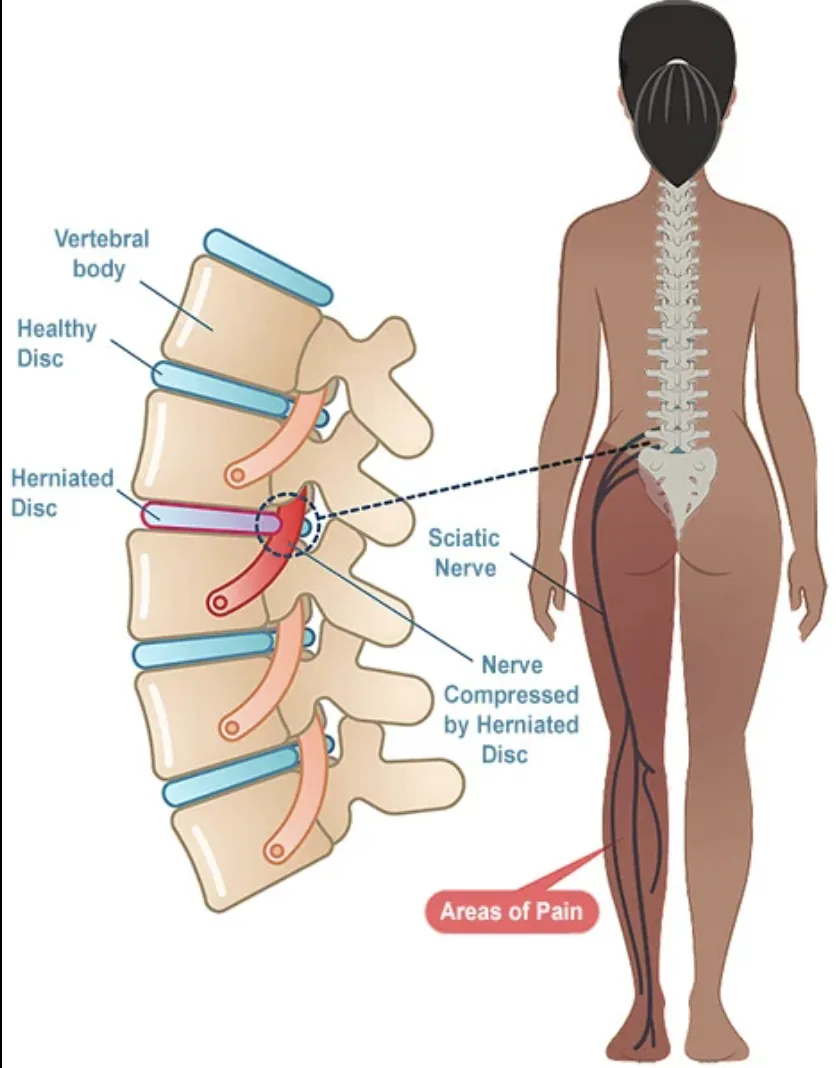
Disc herniations have actually shown to be the primary driver in causing sciatic-like symptoms with it being the cause in roughly 80-90% of the incidences. This is when a portion of the intervertebral disc starts pushing back against the peripheral nerves or spinal cord itself causing pressure and therefore affecting everything below and creates symptoms just resembling true sciatica.
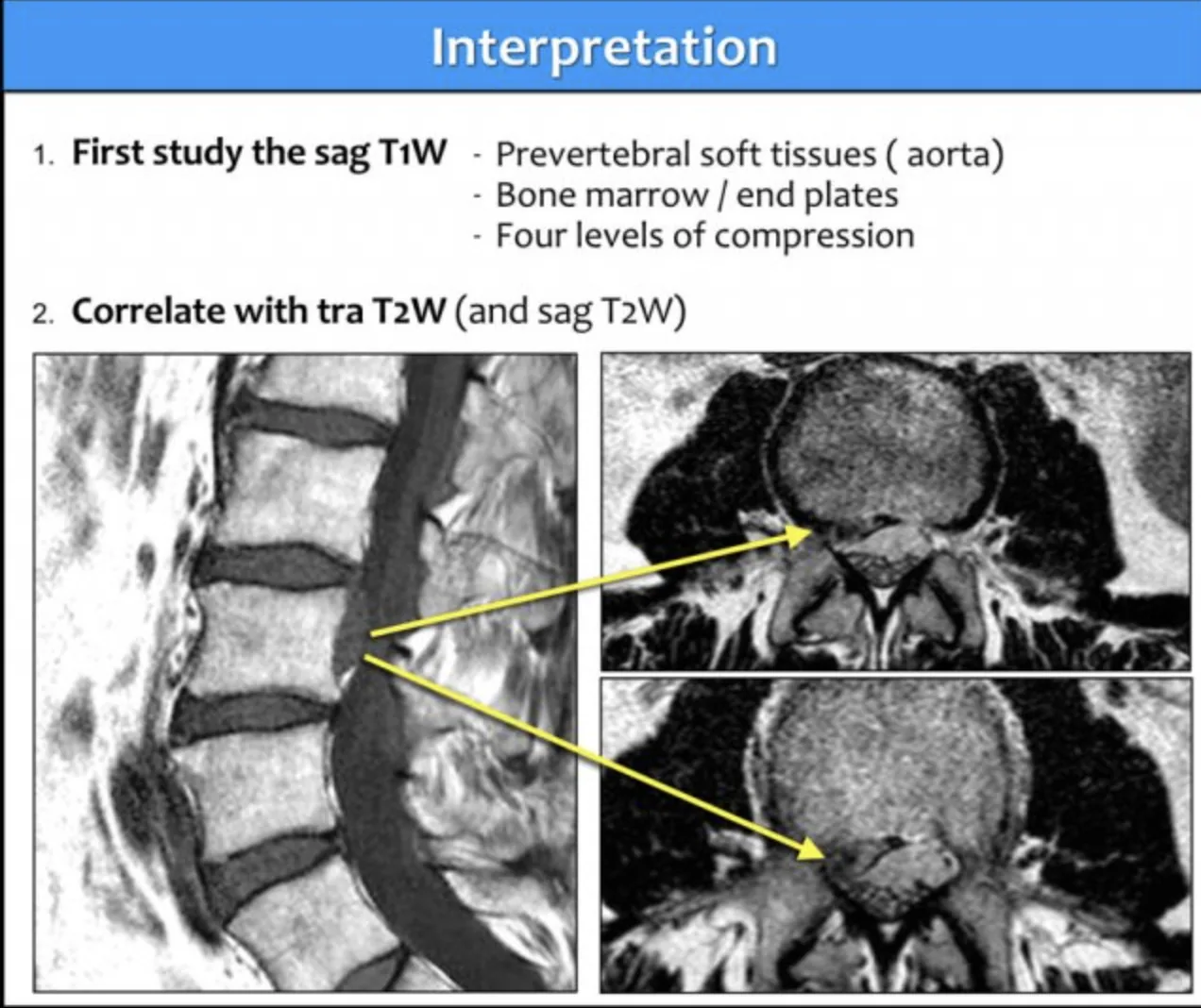
The disc itself does not have to fully penetrate the surrounding tissue enclosing it, it can also bulge out. Think of the disc like a water balloon with fluid moving around with motion. If it bulges, it pushes out but if the tissue breaks, the water comes out to the area. With this being said, many people do already have bulging or herniated discs without even knowing. It only causes issues when it puts pressure on the nerve. When that occurs, you want to immediately start regiments to put the fluid back in the disc. Chiropractic care, Mckenzie method, Ice for inflammation, and core stabilization can be incredibly helpful.
Spinal Stenosis
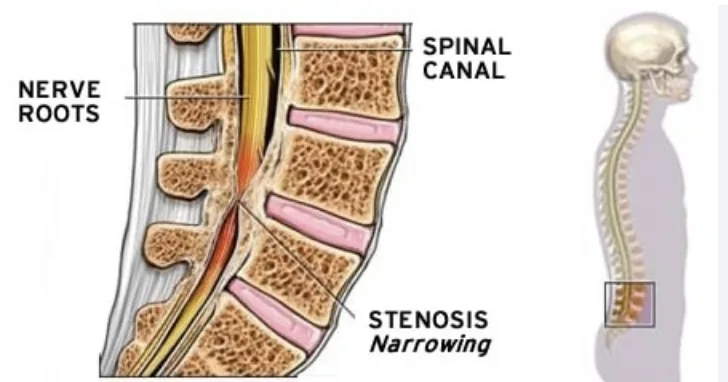
The next cause that can happen is through spinal stenosis and this is when there is narrowing of the canal that encloses the spinal cord and it can even go outward to the intervertebral foramen causing narrowing and create pressure on the nerves there. This reduces the overall space for the nerve to pass through and creates compression upon the nerve, if severe enough. This is more common in older adults and is chronic. This does not develop overnight, it develops over a course of years and is part of the degeneration process. While this is not reversible, the best thing for this type of situation is movement. While your body has laid down bone to adapt to negative pressure, the body can adapt to movement and break structure to function correctly if put through the right elements. It's the same concept as breaking rust off little by little to regain mobility but the rust will still be there.
Piriformis Syndrome
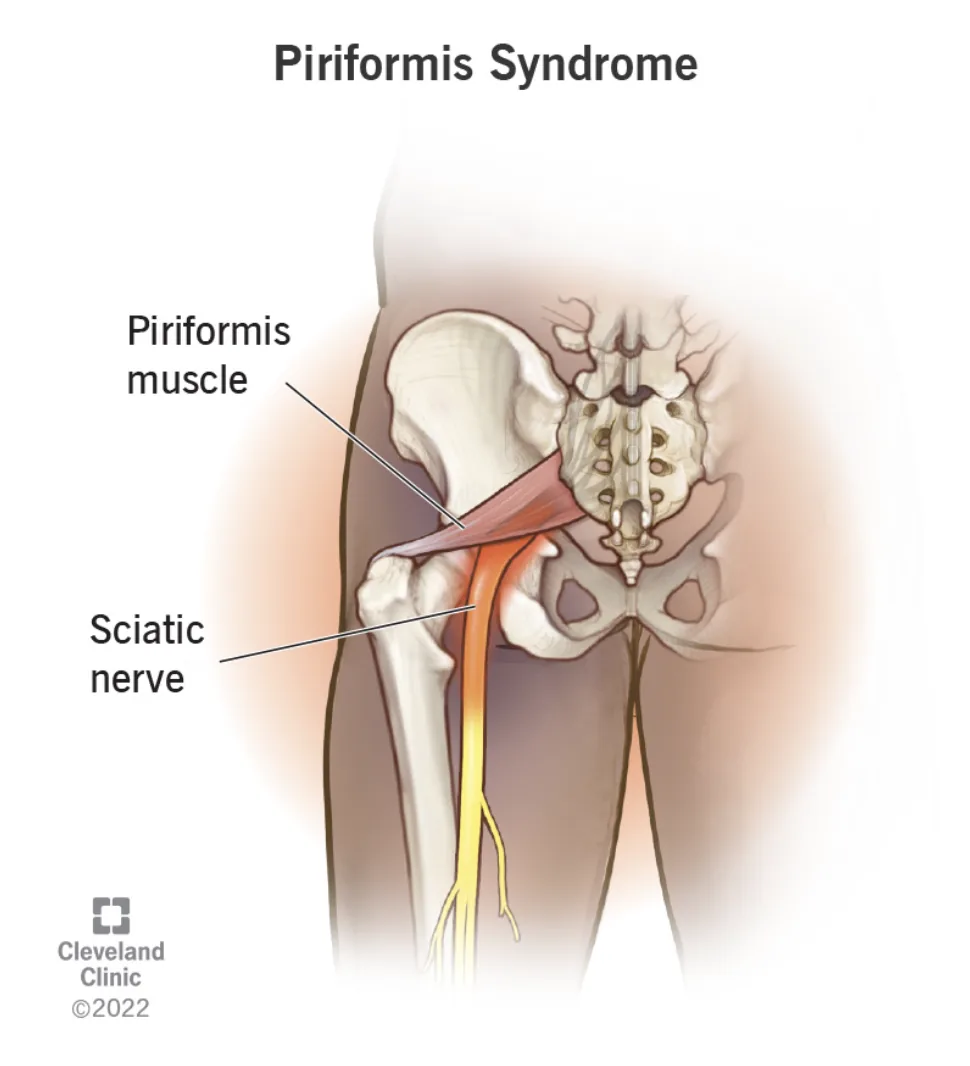
This situation is probably the most common diagnosed or “self diagnosed” cause behind having sciatic issues. This is called, “piriformis syndrome” because of the piriformis putting pressure on the sciatica nerve as it goes around it and even sometimes through it. I believe this is so commonly diagnosed because it is the easiest to comprehend and has had so many interpretations for stretching variations to help out. So, people jump right to it first. For all sciatica related issues, this actually only accounts for 5% or less of causes. While the piriformis can easily be inflamed and easily cause pressure due to the vicinity, the muscle itself has higher durability and if affected, is usually from either joint restriction or injury.
Spondylolisthesis
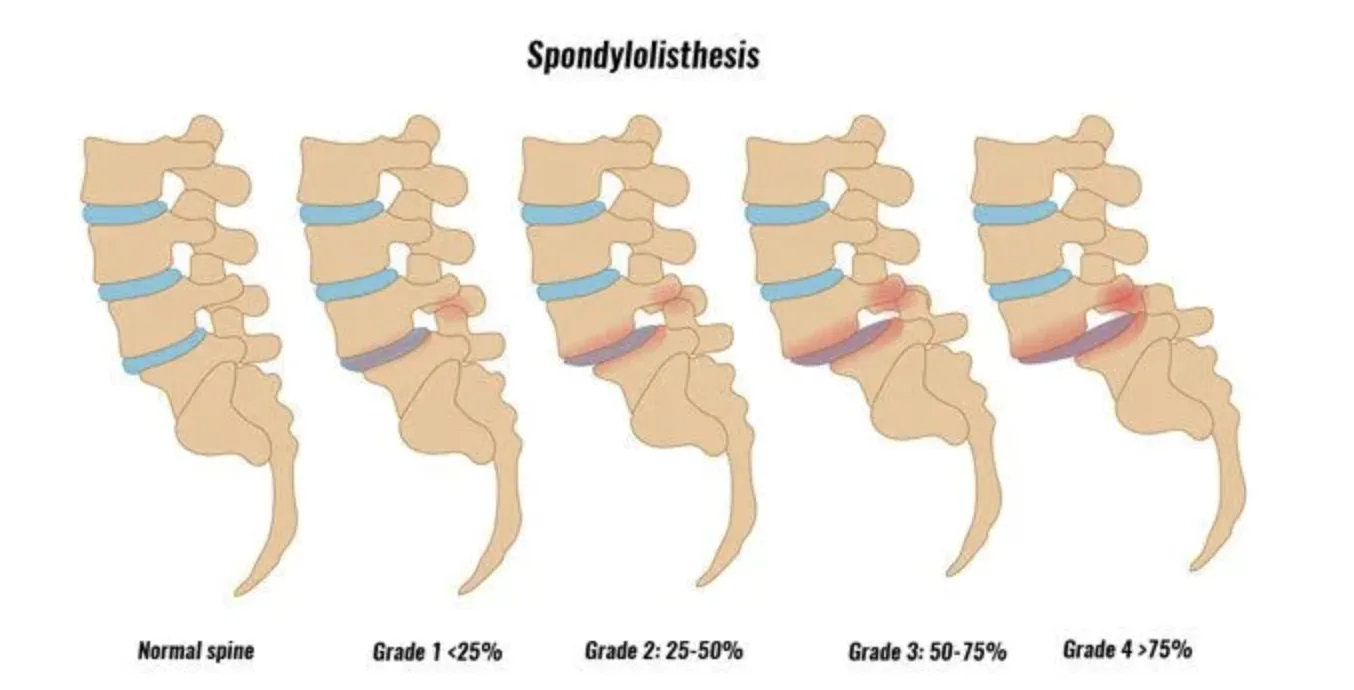
This instance is more traumatic. You can see this commonly in a lot of professions or sports that create compression consistently and are physically demanding of lifting and twisting. One of the most common occurrences would be gymnastics, football, wrestling, hockey, military, and construction. The force causes a break in the pars interarticularis portion of the vertebrae causing a forward slippage of the vertebral body. The slippage can vary in severity or grades but this causes global irritation. This displacement can create pressure on the spinal canal leading to sciatic-like issues that would most likely be bilateral due to cord compression.
When something like this occurs, the course of action can be PT to regain strength in the core and low back to stabilize the vertebrae, chiropractic care to keep productive movement above and below to stabilize the area, and if severe enough, surgery to connect back the vertebrae. There are people who are living with spondylolisthesis and have normal lives, even some of them not even knowing til they ever have an x-ray or pain comes. The course of action truly depends on the pain levels, nerve involvement, and overall capability.
Red flags
When having issues like sciatica come up, it can definitely be scary but with some of the issues that I am about to go over. This is when you must seek immediate medical attention before permanent damage happens. The first one would be loss of bowel or bladder control or “incontinence”. This is when a certain amount of pressure is occurring on the nerves supplying function to the waste organs and is important because when this occurs for too long, it can cause irreversible nerve damage and create dysfunction for the rest of your life. If you notice this consistently and have truly no control over holding in your waste, go to the ER. The second one is severe or progressive leg weakness. This is the same concept because if it is progressing, something is consistently becoming worse internally and needs to be checked out before it gets as bad as it could be and also the longer it occurs, the likelihood it will cause irreversible damage. The third is saddle paresthesia or numbness, this is when the inside of both thighs have lost feeling or sensation, usually congruent with bowel or bladder dysfunction. This shows cord compression due to it being bilateral and needs to get checked immediately. Lastly, severe trauma. This is self explanatory but if you have a traumatic accident, get checked for the red flags to ensure no underlying threat that could be made worse from other forms of care.
Conclusion
After going through a lot of this information, you can see that sciatica is not a one size fits all type of diagnosis. It is a serious condition that is actually one of the leading causes of disability in the US today and requires proper assessment to give the best possible chance at rebounding and getting back on track to normal activity because that is a possibility. It is even possible to decrease the frequency of it flaring up as well with the appropriate preventative measures and simply being aware of your body. Research shows that 70%-90% of sciatica instances can be treated without surgery and have a time frame of around 4-12 weeks. If you want to stay on that lower end, your body requires the basics: movement, nutrition, hydration, and a stable mental environment to give it the best possible chance at adapting to what life throws at you and not get knocked down so easily. If your body becomes easily neurologically irritated, something is up. It needs connection, it needs assurance, it needs information. Ask your chiropractor about it and get checked to start on a healthy foundation. Thank you for reading this far and hope you learned something. As always, live your best life, live Primal! 💪