
Introduction
I want to dive into this article explaining the difference between two types of issues that are common and sometimes generalized as normal parts of lifestyle. Tension headaches and migraines. Tension headaches are labeled as one of the most common forms of headaches to this day,globally, and migraines are not uncommon with 15-20% of people being affected regularly and is 3x more common in women. Whatever the case, with it being a tension headache or being diagnosed with migraines, in my own experience, I have seen many people change lifestyles and even rely on medication to manage such issues, but how can we really know the difference between the two? THis matters because while there are some similarities, the causation is not the same for both and patients are just told if they have one or the other without explanation but is the approach the same? How can we know what to start changing immediately to give us the best chance at living fully on our own? Hopefully this article will shed some light into that and also just give you more knowledge about the body for future reference!
Tension Headaches
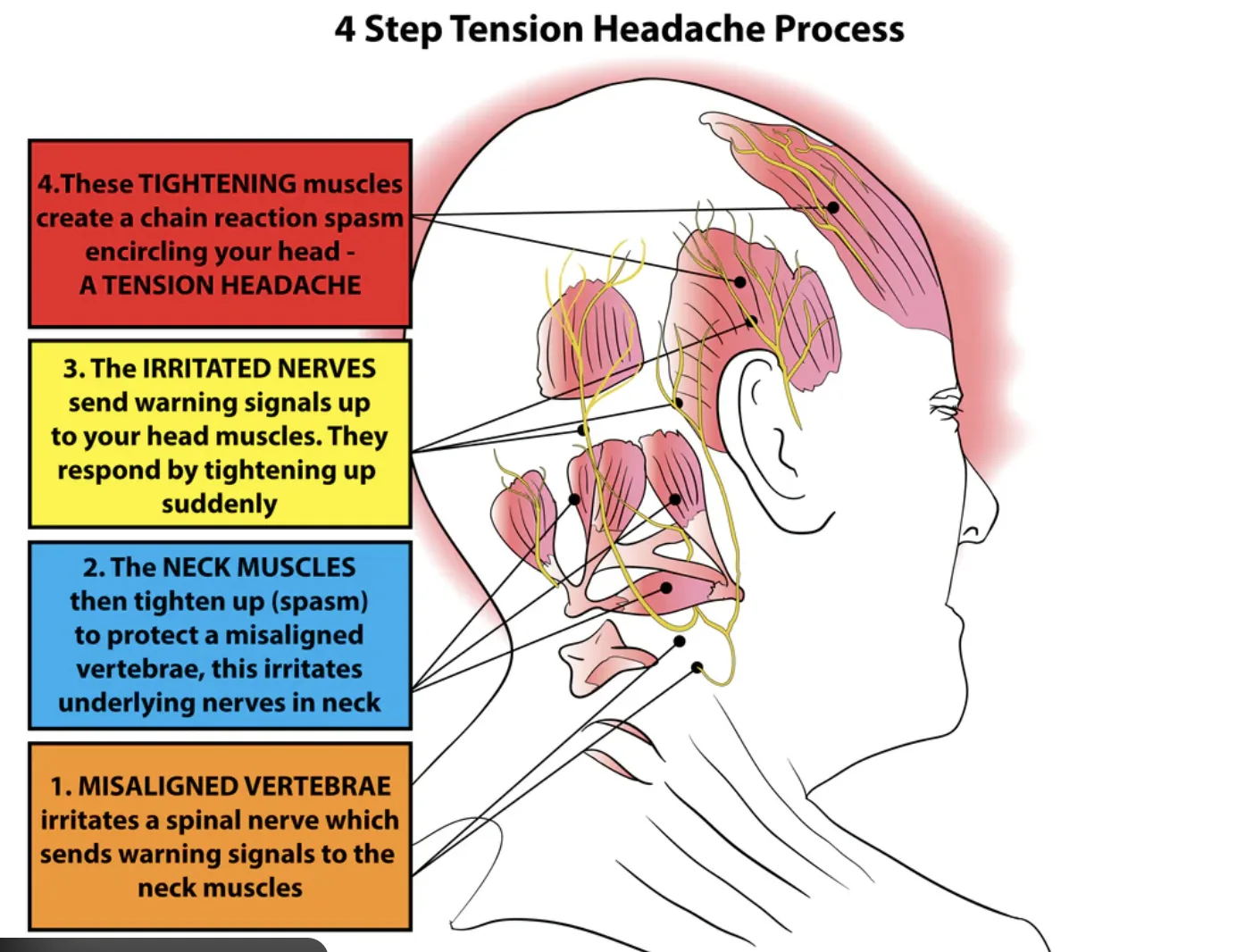
With tension headaches being the most common type of headaches worldwide, there has been a lot of information gathered in identifying the type of headache. Luckily, it is not rather complex in understanding a tension headache because the name truly tells it all, “tension”. That is the driving force behind the headache. It is when tension, often “band-like”, occurs across muscles more specifically in the suboccipital area and creates a dull like pain across the head, often bilaterally. Now what directly causes the muscular tension can be a variety of causes. Could be from vertebrae in the neck being restricted in motion and altering the muscle demand, forward head posture creating constant tension, TMJ issues or grinding of teeth causing certain muscles to be overactive, and lastly even mental stress that is creating fatigue and overload on the muscles. After knowing the possible causes of the tension headaches occurring, you can see how this is the most common type globally. These types of situations arise universally in everyone. To counteract, we must first learn about what negative effects are happening regularly and what we can do to reduce the tension. Adopting general awareness of your overall health always helps and keeps your spine and nervous system functioning optimally greatly reduces the likelihood of continual repetitive flare ups.
Migraines
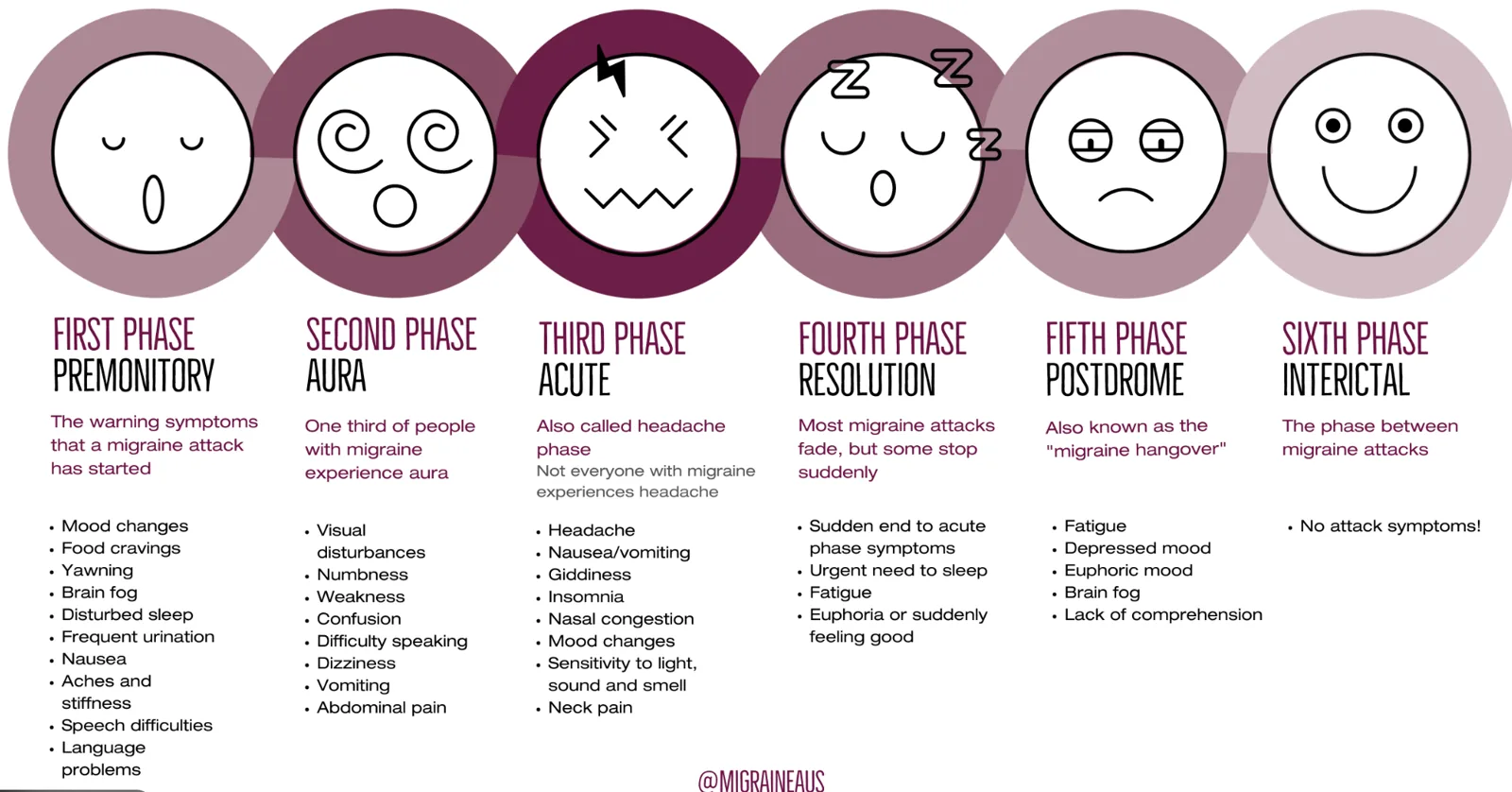
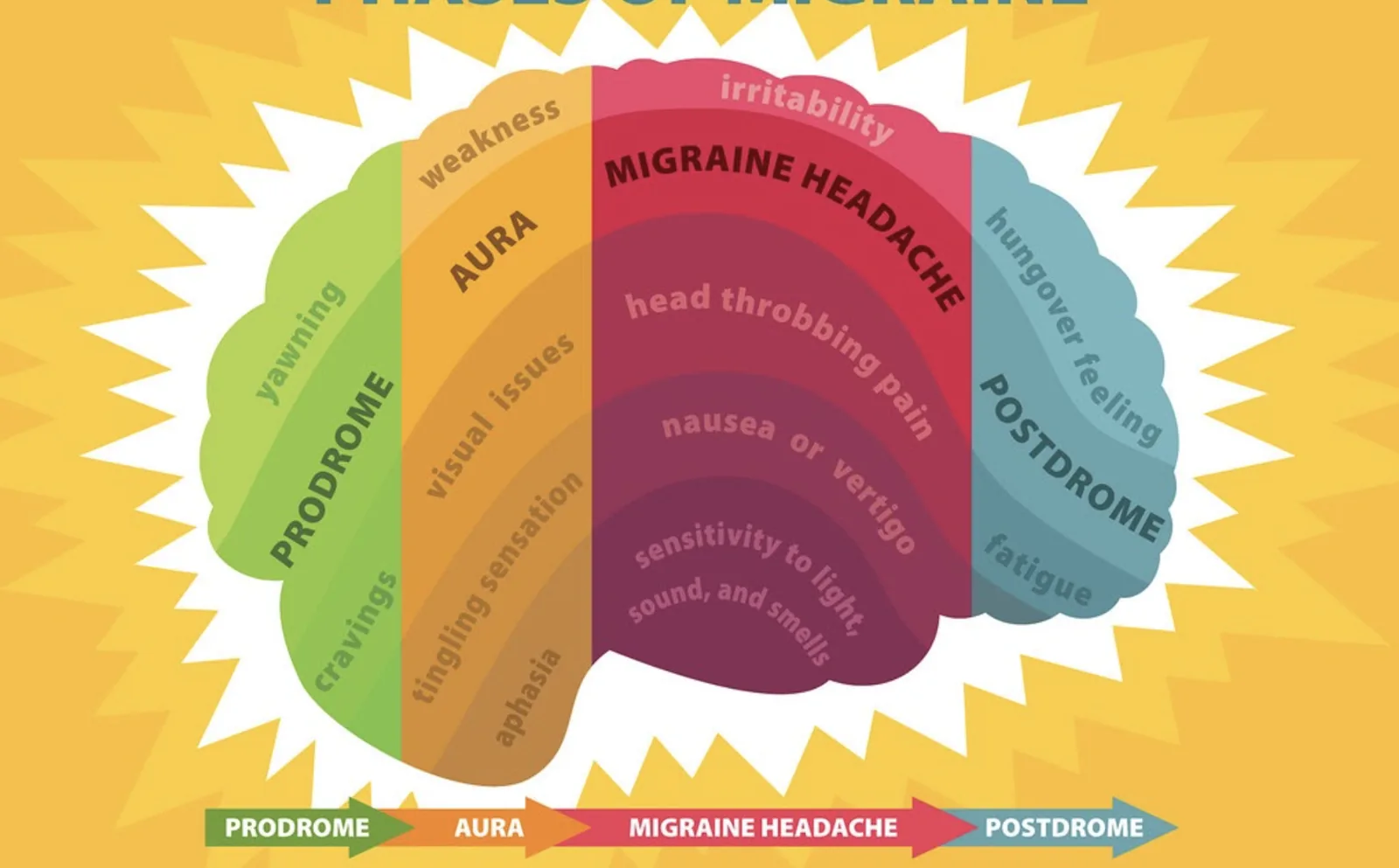
Migraines are a different beast. These are headaches that are neurological in nature. Which means it directly originated in the brain and affects its pathways. As stated earlier, these affect roughly 15-20% of the population with them occurring 3 times more likely in women. Out of those instances, 70-80% associate neck pain to occur as well and can influence the severity. So what truly causes migraines? A lot of times it can be due to specific brain hypersensitivity, activation or pressure of a structure related to the trigeminovasular system, neurochemical change like low serotonin and high cortisol, and even be connected genetically. When these instances occur, it can cause a very limiting quality of life. It creates a one sided pulsating or throbbing pain, visual changes, motion issues, nausea, and even fluctuating intensity/duration for flare ups. One distinctive feature that is also associated with migraines are auras. This is usually the precursor for when a migraine is about to show up in roughly 25-30% of chronic migraine sufferers. The causation of this is believed to be from a wave of electrical disrupting signals sent across the brain called, “cortical spreading depression”. The auras themselves can have symptoms like flashing lights, zig zags, tingling, blind spots, and temporary speech problems. This is important to note because these symptoms strongly resemble ones of a stroke and if you have chronic migraines and never had auras or just experiencing “aura” like symptoms for the first time, you need to seek medical attention to rule out a stroke.
Similarities/Differences
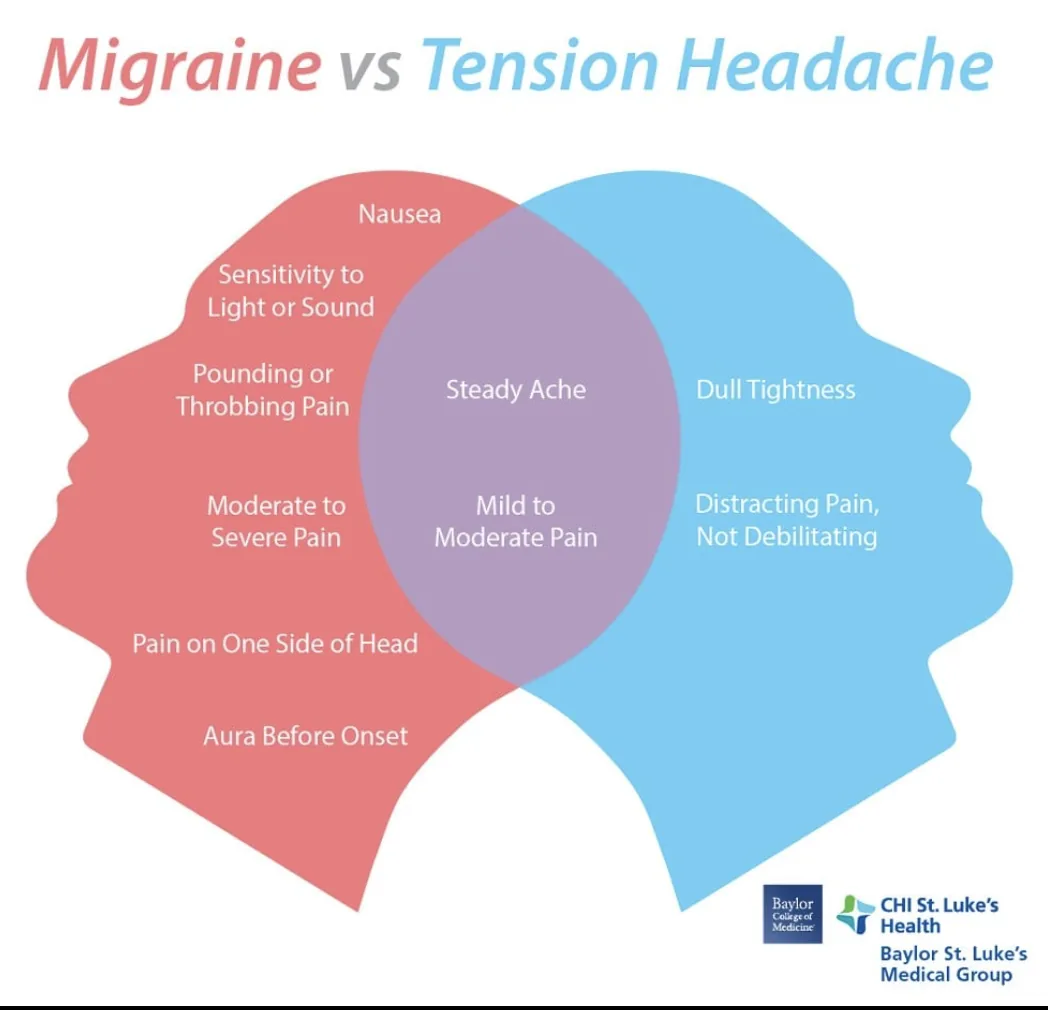
Now let's break down and summarize some of the things that are similar and different between the two to provide a stronger distinction. Tension headaches derive mainly from bilateral muscular tension and tightness occurring in the neck and suboccipital area coming from negative movement patterns, poor posture, spinal restriction, TMJ issues, and even chronic stress. Mechanical stress+overload=tension headaches Migraines are slightly more complex, affecting direct cognitive function. Migraines are more neurological and derive from neurological/stress changes with an array of symptoms like nausea, dizziness, fluctuation of pain and duration, one sided, and distinct features of sometimes having an aura before the start of it. Neurological sensitivity+trigger thresholds=migraines
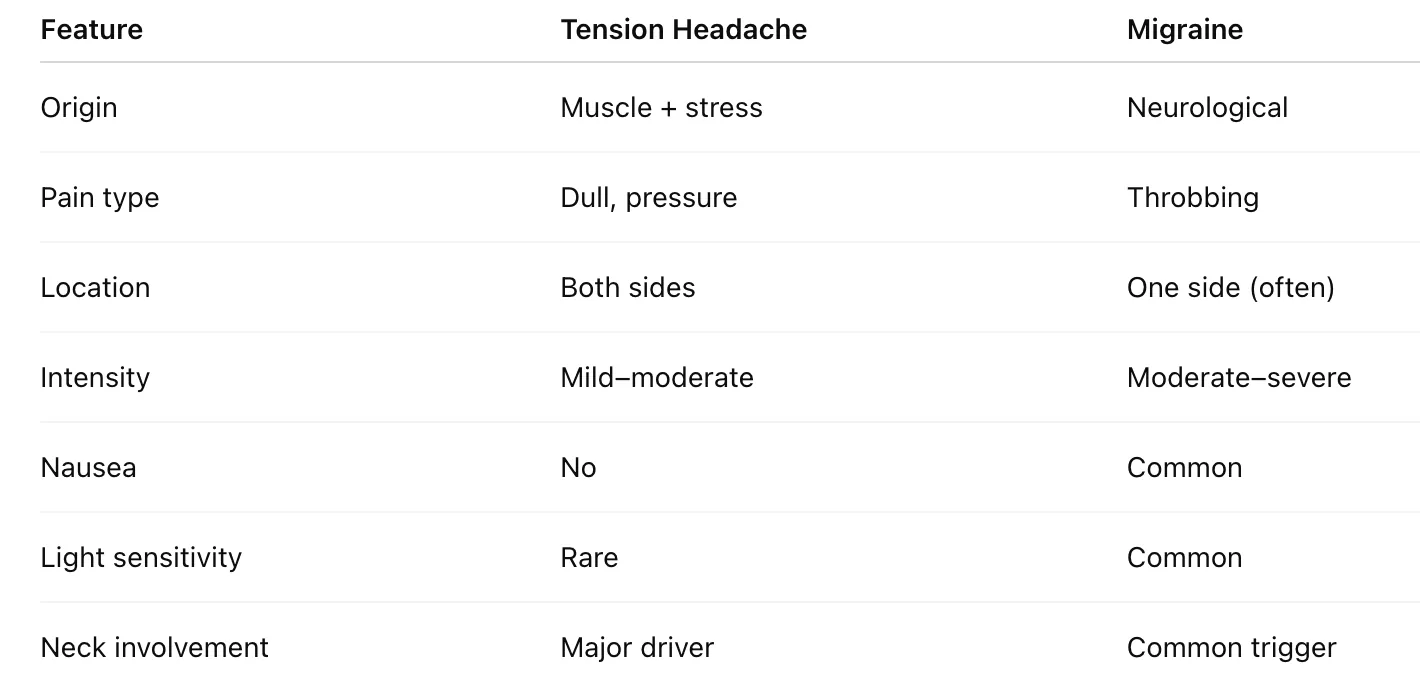
The differences are pretty clear but what is not fully clear is the similarity. The similarity of both having some component of not only physical stress playing a big role but also mental. This directly demonstrates how resilient the nervous system can be and how capable it is to adapt to those demands. If it's managing, it wouldn’t set off an alarm in the body stating it needs help because that is exactly what these symptoms are for each issue. They are warning signs for your body letting you know that something is not responding right, creating abnormalities, and it doesn't know how to stop it. The body does not hurt itself, it was designed to protect and adapt to threats. When it is unable to do that, symptoms occur and dysfunctions happen. Just like any cause and effect relationship with any illness or disease. This is why chiropractic care has been found to make a strong impact in patients with these issues. Adjustments are not a treatment for them but definitely assist in keeping the mechanical motion and nervous system up to date. It allows the body to fight with a clean slate every day with no accumulation of past stress. It recalibrates the body to not only create better movement patterns and sustain those but continue to stimulate the nervous system in a way unlike anything else. This gives the body back its own perfect affinity like God designed.
Conclusion
I hope you have learned something while reading this. I hope you are able to think a bit more critically when you notice a dull pain in the neck or around the head and discern whether it is a tension headache, migraine, or neither. This isn't to say that you should not ever seek medical guidance because you still should get all the support you can, but put some of your own thought into it and contribute, instead of blindly accepting any solution you're told. Also think about your own electrical system. Every negative and positive feedback has to be sent from the body to the brain and back out. If that is not clear, nothing will respond accordingly. Get checked, gain motion, acquire durability. Whether it is a migraine, a tension headache, or anything else. You will be better off and more yourself. Thank you for reading and Live Primal!💪