
Introduction
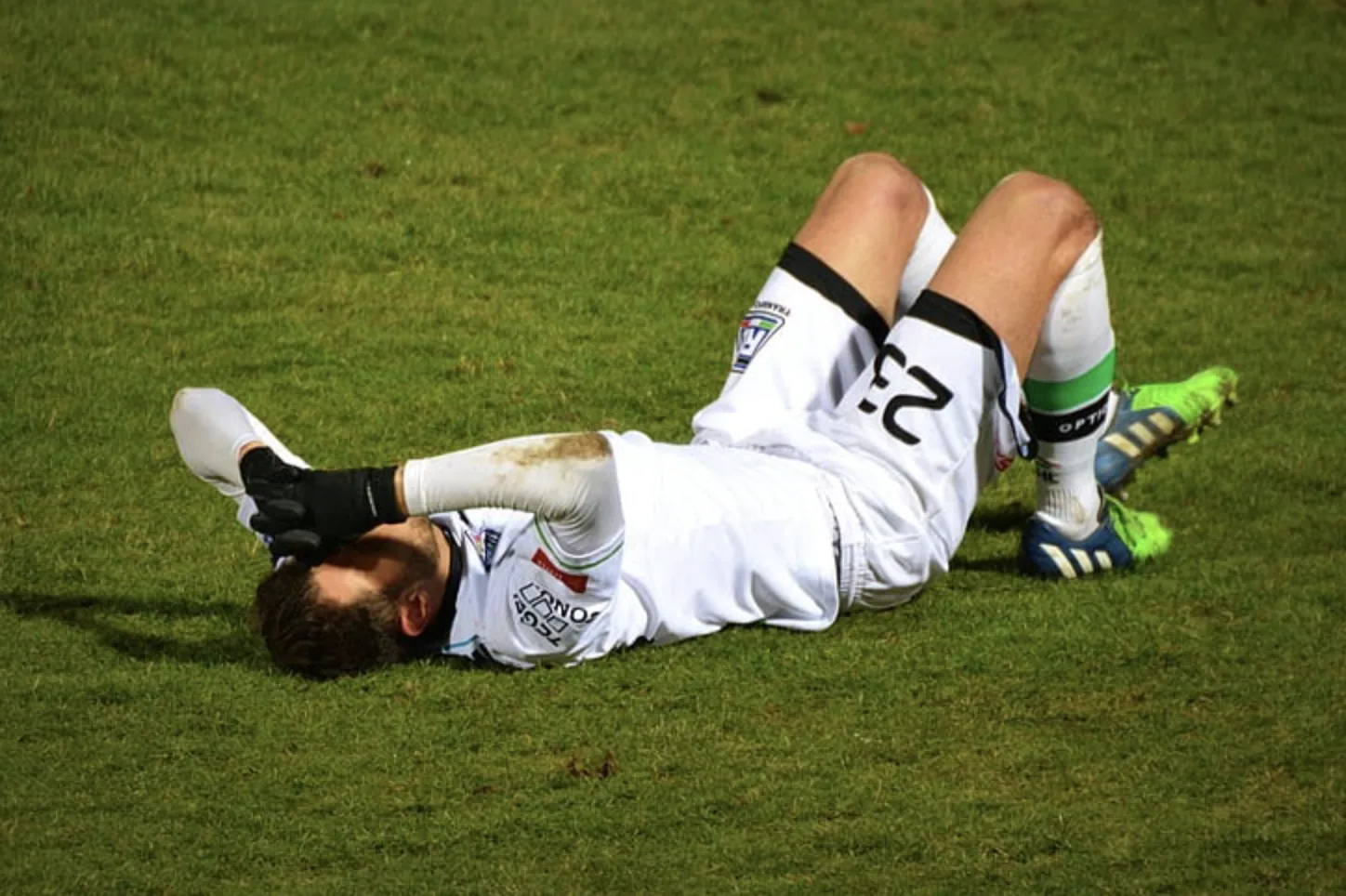
Have you ever played sports growing up or knew someone that did? If so, you most likely also heard about their injuries multiple times. Being active, especially at a higher level than normal daily life can cause incidents to occur that create damage or injury to various structures. However, is it normal to continually have damage to the same structure after it should have already been through its theoretically full rehab process? Sure, some of the integrity has been lost to the tissue but if all injuries create a guaranteed decrease in optimal performance that will never be regained, how are athletes able to come back stronger than before? While there are others that repeatedly injure the same structure like clock work. Do you think it’s luck? Do you think it's genetics? This is what we will get into today.
Injury Consequences
The athlete's body is built for performance. It was trained to react instinctively with different situations, muscular tone and coordination are attuned with demands, and everything is functioning as a fluid unit specialized for that one sport. The human body can learn this due to the fact of its own capability of being able to adapt under stress and learn accordingly. It innately has the foundation for potential. However, it doesn’t innately know how to reproduce the reward of those years of training, without the training. So, when the human body goes through an “injury”. The body snaps out of performance mode and into adaptation mode. This is the mode that the body is innately designed to shut on. It is for survival in keeping further injury from happening. Muscle fibers start to fire differently, joint load alters, nervous system protects, and compensation patterns start to develop. All in the hopes of putting your body in the best possible environment to heal efficiently and properly. Its main priority is getting back to base line function. It doesn’t care about performing at the top tier anymore since it can’t even do common activities. I say all this to explain that when an injury does occur, it isn’t as simple as getting some rest and waiting til there is no pain to jump back out to the same high level of activity. Your body has to retrain and relearn those limits, climbing to peak performance as you were at before. It won't take as long as learning from scratch but there is still a time component. Lets get into a few of reasons that reinforce this thinking and when ignored, it commonly leads to consistent injury.
Load>Capacity
Repetitive injuries occur when training load+external stress are consistently greater than tissue capacity+recovery. This means that the stress your body is used to becomes more than what it is capable of handling consistently which then leads to consistent injury. This is one that sometimes modern athletes look over simply because they do not critically think about what they put their body through nor reflect on how they help their body recover. This equation encapsulated a well rounded thought process in incorporating all aspects of health that should be taken into consideration. If your body is consistently being pushed to its limit but you also have high psychological stress, improper form, poor mobility control, poor sleep habits, and poor nutrition. You will very soon wear out your body and lead to injury. Everything must be balanced to give the best possible chance for your body to perform and recover adequately. Depending on your tissue capacity, even one of these deficits can slowly drain the tank leading to injury sooner.
Incomplete Rehabilitation
This is the #1 predictor in re-injury. Remember what we were talking about having to give your body time to retrain and relearn? This is it. Pain is the first thing to go away in the rehabilitation process but that just means the immediate response is over. There are still connections and habits that have to be reformed in order to get back to 100%. Throughout the healing process, the body focuses on recovery. So, muscle mass will decrease which leads to instability, reaction time will decrease which leads to more opportunity of injury, and if this is one side of the body, there will be asymmetry across both sides that could lead to compensatory movement patterns. These functions must be trained again to that higher function like before and given the adequate amount of time to be reintroduced into the activity. If done correctly and with enough patience, this gives the best possible chance in making the injury a thing of the past instead of it lingering constantly over the years like a crutch.
Nervous System Remembers
The Nervous System is our highway of information from our brain to the rest of our body controlling every function we do. It knows the routes most used, the convenient shortcuts, and road blocks that have been put up. When training, the nervous system creates pathways through neuroplasticity that are consistently and efficiently used for the demands but when an injury happens. The educated pathway of function is blocked to stop from re-injury and a new road is paved for rehabilitation. When rehabilitation is gone through, that past educated pathway is not automatically unlocked again. It has to be re-opened, cleaned up, and re-modelled to function as efficiently as it was before. The brain can instinctively inhibit the process by restricting certain muscles from firing again out of fear it will injure again. This is called arthrogenic muscle inhibition. These limitations that are set due to the injury must be addressed and worked through to reshape that pathway back to normal through retrained neuroplasticity.
Conclusion
Now, we have gone through a few of the reasons why an athlete's injury can become more than an injury but a consistent obstacle that leads to loss of optimal performance. Which then, leads to less desirable outcomes. We have learned that we must first take into consideration all aspects of the recovery process ranging from physical, chemical, and emotional environments. This ensures the body is given the best possible chance at 100% recovery. We must then be patient in the rehabilitation process seeing it all the way through. You must also be conscious and aware of not only looking at sensation of injury but desired function. Once pain is removed, the neurological aspect must be retrained to ensure clear communication is sent for movement, reaction, nutrients, and healing signals properly. Chiropractic care keeps clear communication of the highway so that is necessary as well with the rehabilitation program and can even speed up the process faster than conventional methods due to the brain adequately taking control. With the right environment, right mindset, and right amount of discipline in healing. Your body's functionality and resiliency can be restored to 100% or even better. Just remember when an injury occurs, focus on capacity, control, and recovery. Not weakness nor pain. Live Primal💪